GitHub is having trouble right now, so adding repositories and rebuilds are paused. Your existing maps still work.
Built from your git history

Your whole codebase,
on one map.

Zoom from the big picture down to a single line of code. See who knows what, where the risky corners are, and how your project really grew. Point gitmap at a repo and it draws the rest.

Who knows this code?

Every file, colored by the people who actually work on it. Spot the code that depends on one person while there is still time to do something about it.

Where should I worry?

Hotspots, untested core code, and modules nobody quite owns, ranked and pinned right where they live. Your next refactor practically plans itself.

What happened here?

Scrub through years of history in seconds. Watch the project grow, see where last month's work landed, and review any branch or PR right on the map.

Built for the questions you keep getting asked

Planning, staffing, onboarding, review. gitmap answers them from the git history you already have, and shows its work on the map.

Who owns this?

See your bus factor before it bites.

Every file, colored by the people who actually work on it. Knowledge risk ranks the core modules only one person knows, so you can line up a second owner before the resignation letter, not after.

See ownership on the polars map →
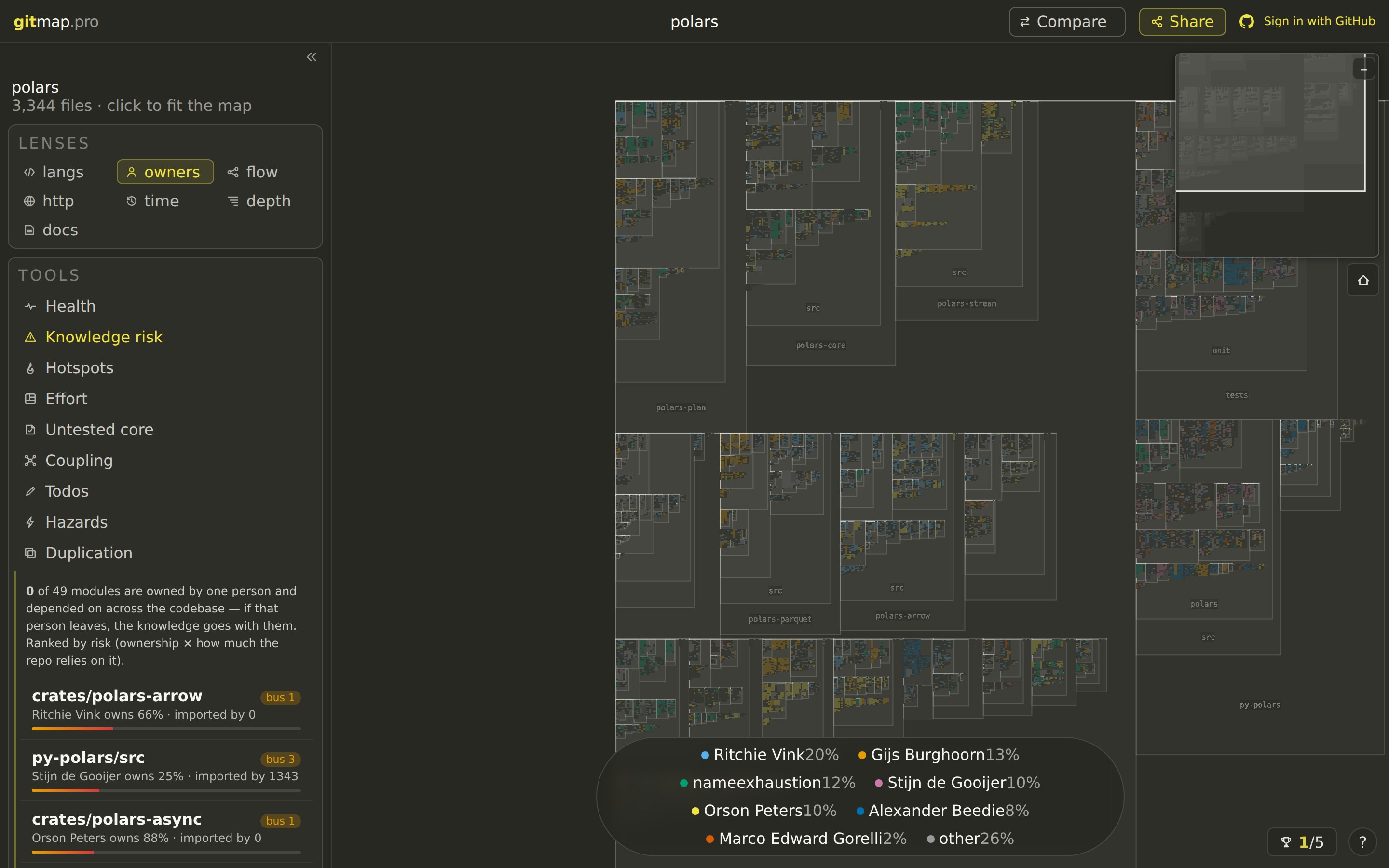
gitmap knowledge risk: the polars codebase colored by owner, with a ranked list of modules one person owns

Where should we worry?

Point the refactor budget at the right files.

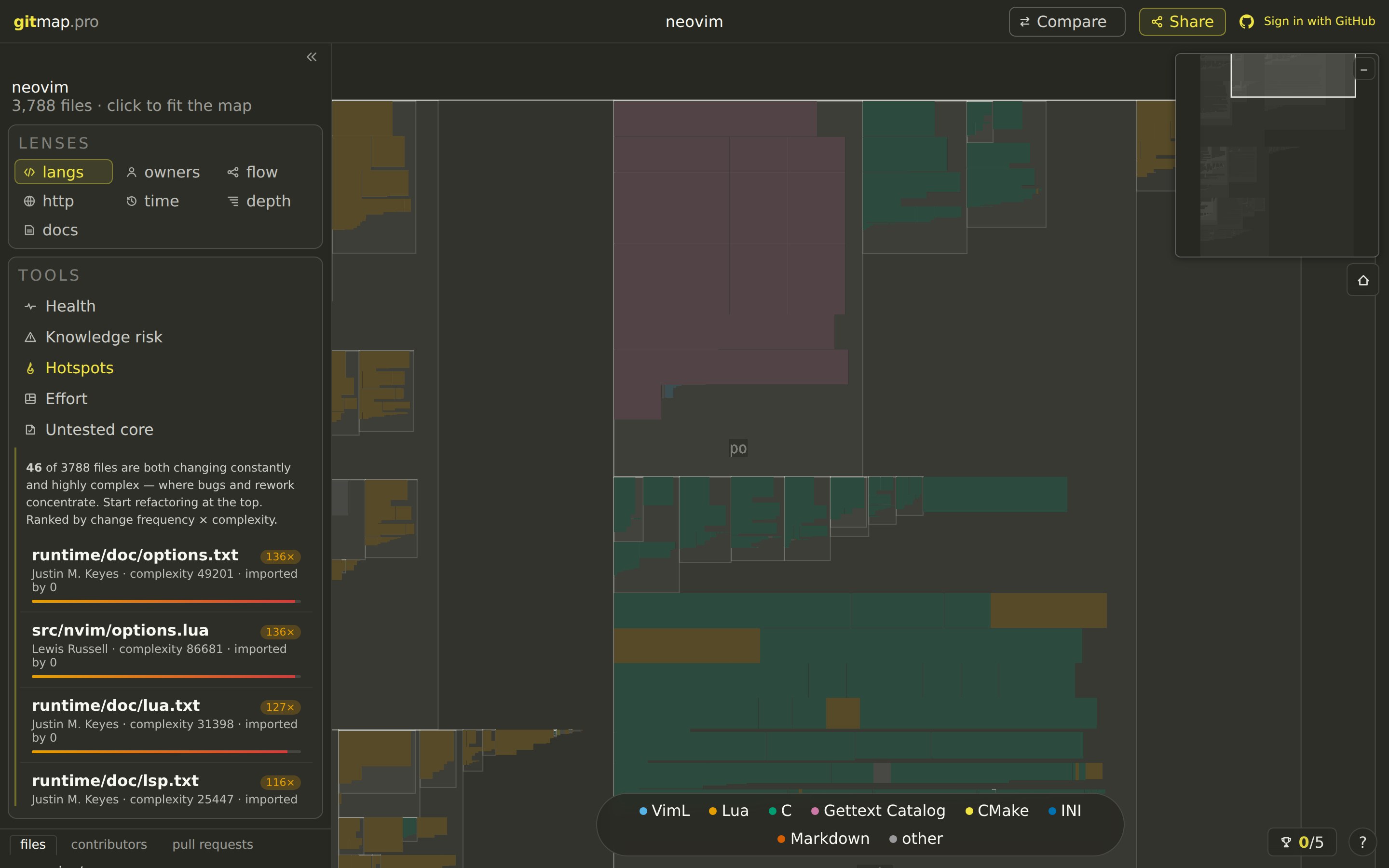
Hotspots rank the code that is both complex and constantly changing, which is exactly where bugs and rework concentrate. Walk into planning with a ranked list instead of a hunch.

Find the hotspots in neovim →
gitmap hotspots: neovim colored by language with the most-churned complex files ranked in the sidebar

What happened here?

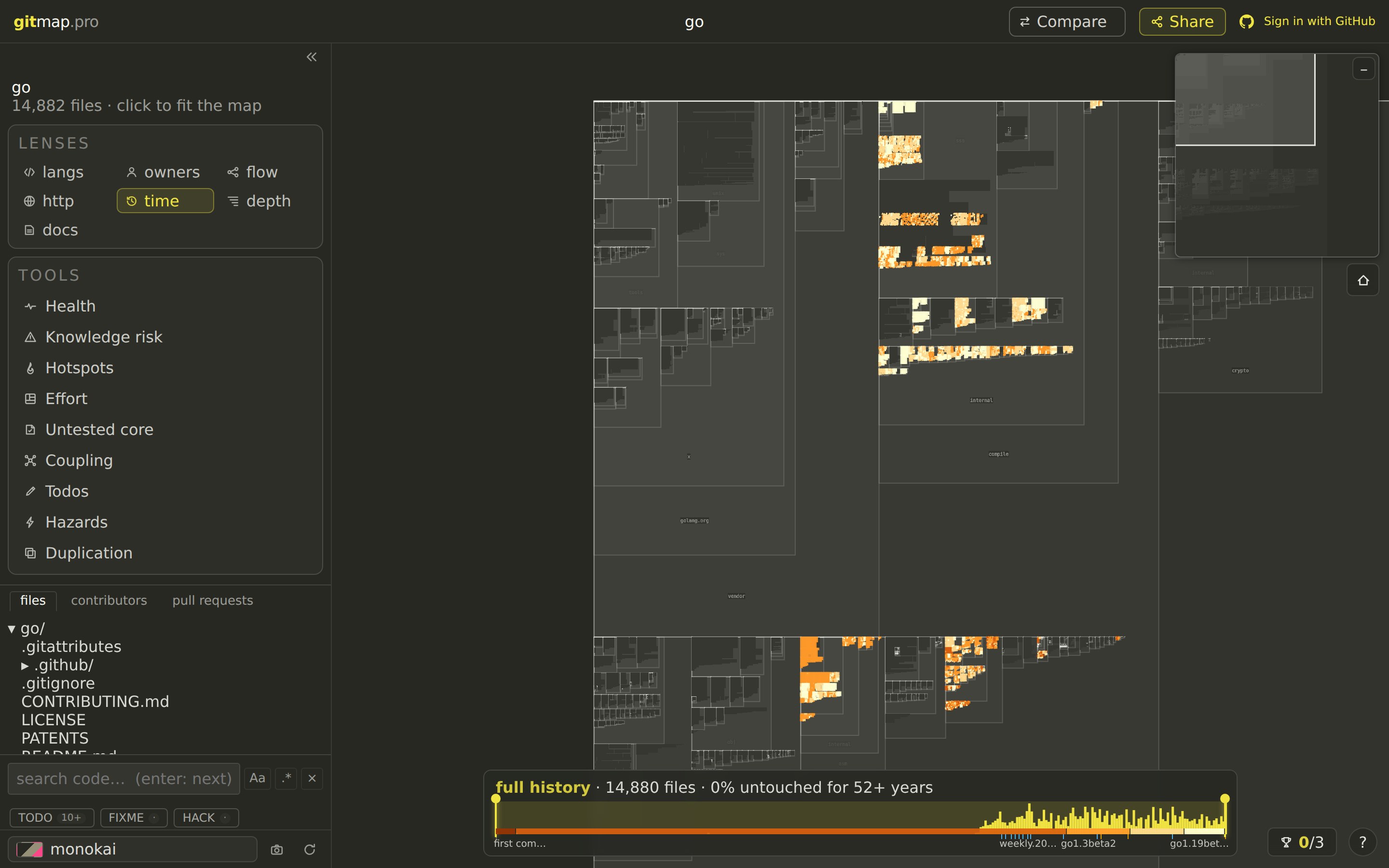
Scrub through decades in seconds.

The time lens paints every line by the era it was written and lets you drag through the project's whole life. See where last quarter actually landed, and which corners nobody has touched in years.

Walk through Go's history →
gitmap time lens: the Go codebase with recent work highlighted and a timeline of 52 years of commits

How does it connect?

Hand new engineers a map, not a maze.

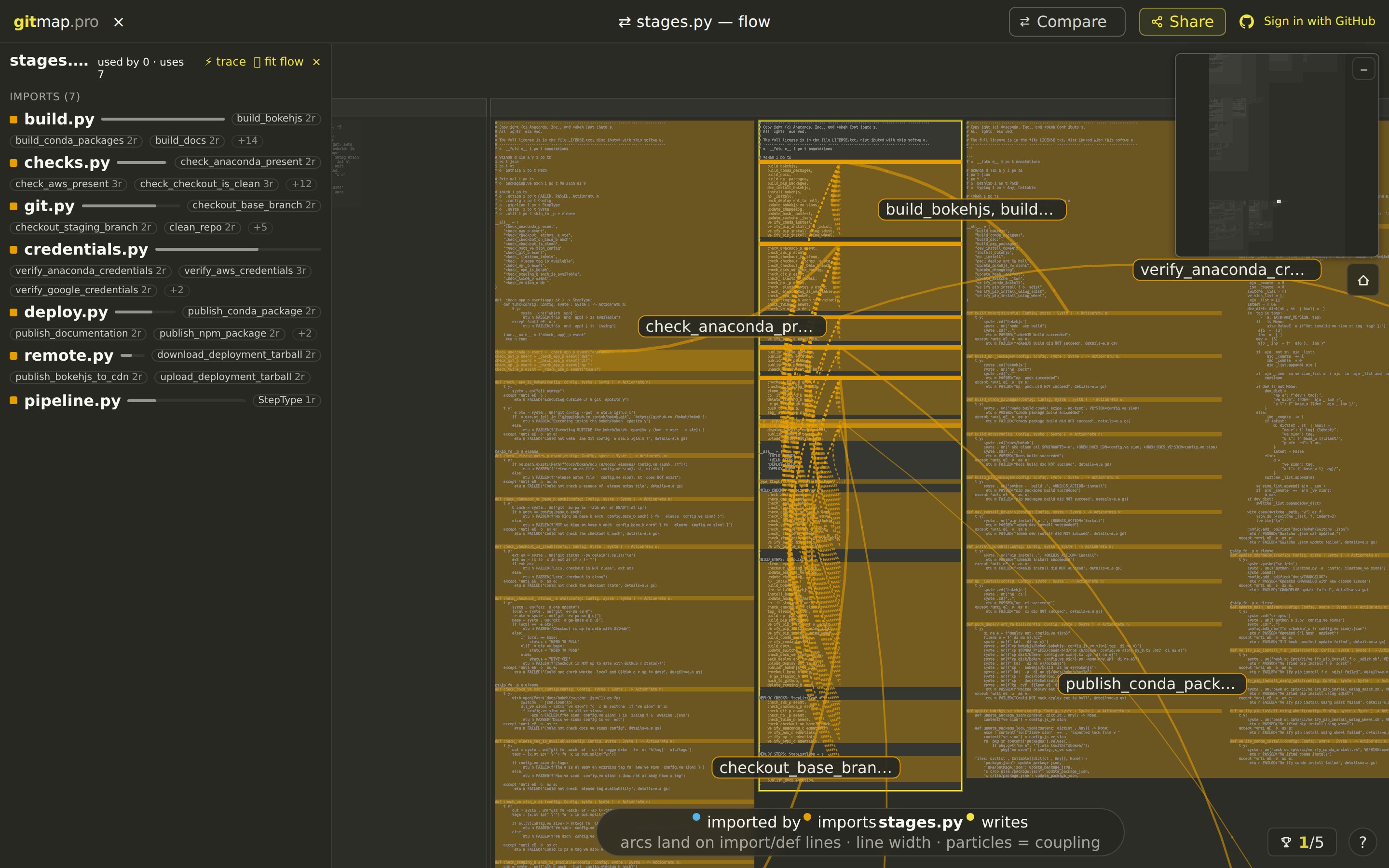
Click any file to trace what it imports, where every symbol is actually used, and what would feel it if the file changed. The architecture walkthrough, without booking a meeting.

Trace the flow in bokeh →
gitmap flow lens: a focused file with import arcs landing on its import rows and dashed arcs tracing symbol usage line by line

Featured maps

Wander a real codebase and get a feel for it. Free to explore, no sign-in needed.

Pricing

Start free with a public repo. Go Pro when you want your private code on the map too.

Free

$0
  • One public GitHub repository
  • Up to 250k lines
  • Search, language & dependency views
  • Private repositories
  • Git submodules

Pro popular

$19 / month
  • Private repositories
  • Git submodules
  • Diffs, contributors, code-age, blame
  • Agent fleet transparency — live + replay view of AI agents working your codebase
  • 5 repositories included
  • Then $4 / repo / month
Upgrade to Pro

Prices are illustrative; the live amount is set in Stripe.

See gitmap in action first

Plans make more sense once you've explored a codebase as a map. Take a look around a real one, free and without signing in, and pricing unlocks from there.

Explore a demo map

Your maps

separate maps that refresh on their own schedule
Map a single repo (owner/repo) or any user's public contributions. Just type the name. Free plan: one public repo up to 250k lines. Pro: private repos, submodules, and contribution maps.

Your boards

Compose several maps on one canvas — drag them around, zoom from portfolio overview down to readable code.

Account

Admin

You're on Pro

Payment received. Your private repositories and submodule support are unlocked.

Checkout canceled

No charge was made. You can upgrade whenever you're ready.

Terms of Service

Privacy Policy

Security & Trust